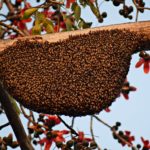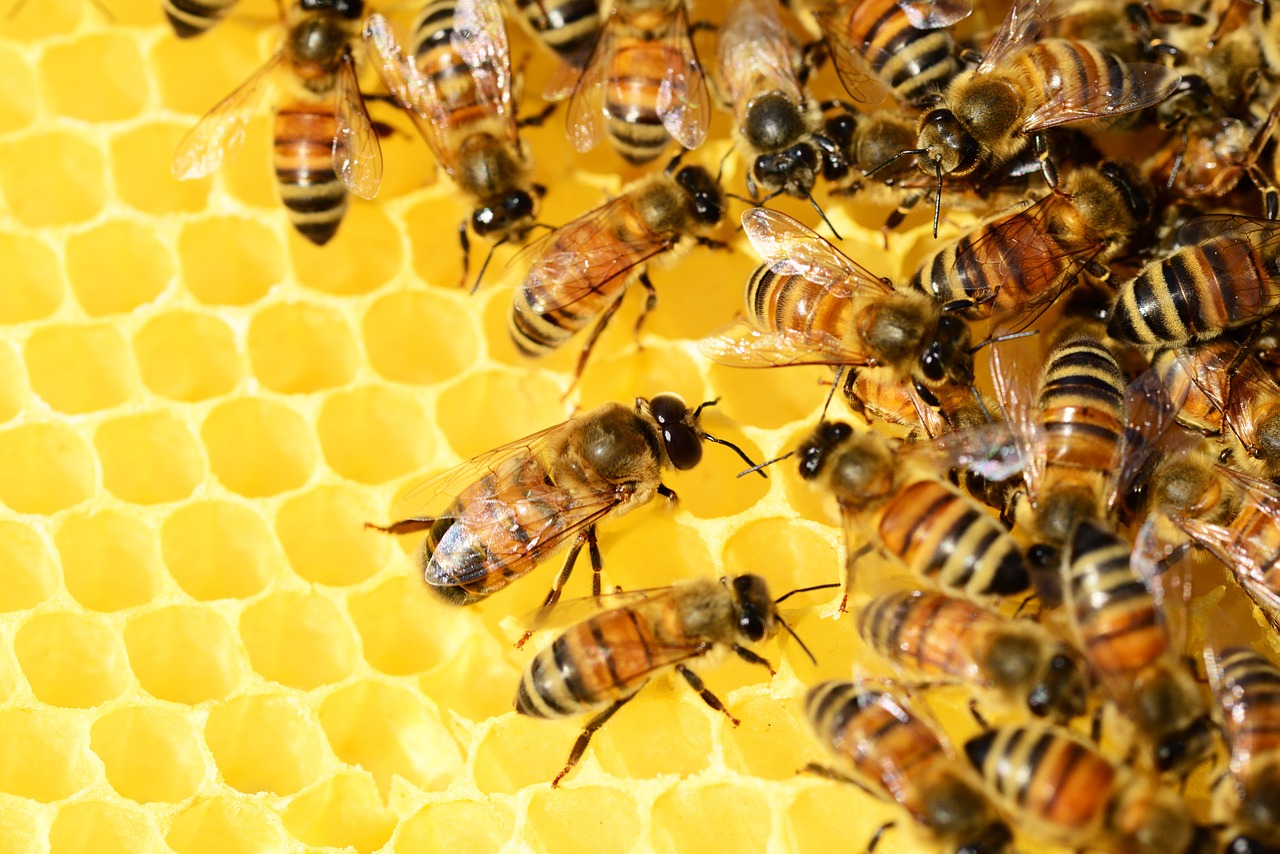
A colony of bees consists of anything from 20,000 to 60,000 honey bees and one queen
The bee is the only insect that produces food eaten by man – honey is the only food that includes enzymes, vitamins, minerals and water all the substances needed to sustain the body and is the only food to that contains pinocembrin and antioxidant associated with improved brain function
The bee has such a precise sense of smell that is can differentiate hundreds of different floral varieties and tell whether a flower carries pollen or nectar from meters away
The average worker bee produces about 1/12th of a teaspoon of honey in its life which is about 6 days
Bees have 6 legs, 2 compound eyes (one on each side of the head) made up of thousands of tiny lenses, 3 simple eyes on the top of the head, a pair of wings, a nectar pouch and a stomach. Bees have 170 odorant receptors compared to 62 in fruit flies and 79 in mosquitoes. They have ability to recognise their own kind, signal, socially communicate in the hive and odour recognition for finding food
The bees brain is oval in shape and about the size of a sesame seed, yet is has remarkable capacity to learn and remember things
The wings of a bee stroke incredibly fast, about 200 beats per second to make their distinctive buzz. The bee can fly for up to 10 kilometres and as fast a 45 kilometres per hour. A hive of bees need to fly about 145 kilometres (equivalent to orbiting around the earth 3 times) to make 1 kilogram of honey
Each honey bee colony has a unique odour for identification of its members
Bees communicate with each other by dancing
During winter bees feed on the honey the collected in summer. Forming a tight cluster in the hive to keep themselves and the queen warm
The honey bee hive is a highly organised society which acts with intricate co-operation